Morattab and the Pazhan
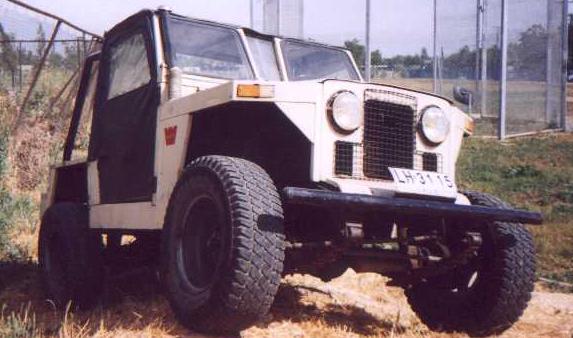
- Years
- 1962–2016
- Engine
- 2.4/2.8 four-cylinder; 3.0 V6 (Pazhan)
- Drive
- 4x4
- Origin
- Tehran, Iran
Land Rover assembly in Iran
Morattab Industrial Manufacturing Company was established in Tehran in 1957, initially acting as an agent for commercial vehicles before moving into manufacture. From 1962 the firm assembled versions of the Series Land Rover under licence, and a distinctly Iranian branch of the Land Rover family tree took root.
The 1979 revolution changed the company’s footing entirely. Morattab was nationalised, with the state’s Industrial Development and Renovation Organisation holding a 33 per cent stake until March 2000, and licensed assembly gave way to locally evolved production. The vehicles that followed diverged further and further from the final Series III as built in the United Kingdom, developing along their own path with an ever-higher share of Iranian-made content.
One honest caveat: published accounts of Morattab’s early years are thinner than for the European licensees, and they differ on exactly how the first kits and drawings reached Tehran. The broad arc, from licensed Series assembly to independent evolution, is well established; the fine print is not.
What the early Tehran production actually looked like is best read through its Spanish cousin: the kits Morattab worked from in the 1970s followed the Santana pattern of 88 and 109-inch models rather than Solihull’s, which is why surviving early Morattabs photograph like Spanish trucks — and why the later purchase of the Santana 2500 line was less a change of direction than a homecoming. The company had been building Santana’s interpretation of the Land Rover for a generation before it bought the tooling outright.
The Santana connection
Morattab’s most interesting chapter runs through Spain rather than Solihull. Santana of Linares, itself a Land Rover licensee that had long since gone its own way, sold its 2500 production line to Morattab in the mid-1990s. Out of that tooling came the Pazhan, a leaf-sprung utility built in Tehran from 1995 whose ancestry traced back through Andalusia to the Series Land Rover. The fit was a natural one. The Santana 2500 was the final leaf-sprung development of the Series line in Spain, so its production equipment landed at a factory that had spent three decades building exactly that kind of vehicle.
The Pazhan range
The modernised line-up arrived in 1999 as the Pazhan 2400, offered as a three-door station wagon and a four-door pick-up, with a five-door wagon following in 2000. Power came from a 2,388 cc four-cylinder petrol engine or a 2,776 cc diesel. In 2004 the Pazhan 3000 added a 2,972 cc Hyundai-sourced V6 petrol engine along with a selectable rear-wheel/all-wheel-drive system of Morattab’s own development.
| Model | Introduced | Engine |
|---|---|---|
| Pazhan 2400 (3-door wagon, 4-door pick-up) | 1999 | 2,388 cc petrol / 2,776 cc diesel |
| Pazhan 2400 GL (5-door wagon) | 2000 | 2,388 cc petrol / 2,776 cc diesel |
| Pazhan 3000 | 2004 | 2,972 cc Hyundai V6 petrol |
The Pazhan stayed deliberately simple throughout: leaf-sprung chassis engineering carried over from the Santana 2500, slab-sided utility bodywork and a manual gearbox. The station wagons lasted until 2014. The pick-ups carried on until 2016, when production ended amid financial difficulties at Morattab and a wider shutdown in Iranian truck manufacture. By then the company had broadened its base in other directions, taking on assembly of the SsangYong Musso in 2003, and it remains listed among Iran’s active automotive manufacturers even with the Pazhan gone.
Why the Pazhan matters
Few production runs show the licence-built idea travelling this far. A British design was built under licence in Spain, evolved there into the Santana 2500, and its tooling then crossed to Tehran, where a recognisably Series-derived vehicle stayed in production into the 2010s. That is a sixty-year thread from Solihull’s drawing office to an Iranian pick-up, and the Pazhan is the last knot in it.
Frequently asked questions
Did Land Rover ever build vehicles in Iran?
Not directly. Morattab of Tehran assembled Series Land Rovers under licence from 1962, working to the Santana pattern, and the line evolved into increasingly Iranian vehicles after the company was nationalised following the 1979 revolution.
What is the Morattab Pazhan?
A leaf-sprung utility built in Tehran from 1995 on the Santana 2500 production tooling that Morattab bought from Spain, sold in modernised Pazhan 2400 and 3000 forms from 1999 and 2004.
What engines did the Pazhan use?
A 2,388 cc four-cylinder petrol or a 2,776 cc diesel in the 2400; the Pazhan 3000 of 2004 added a 2,972 cc Hyundai-sourced V6 petrol with Morattab’s own selectable rear/all-wheel-drive system.
When did Pazhan production end?
Station wagons lasted until 2014 and pick-ups until 2016, when production ended amid financial difficulties and a wider shutdown in Iranian truck manufacture.