Land Rover 109 One Ton: The Rarest Leaf-Sprung Workhorse
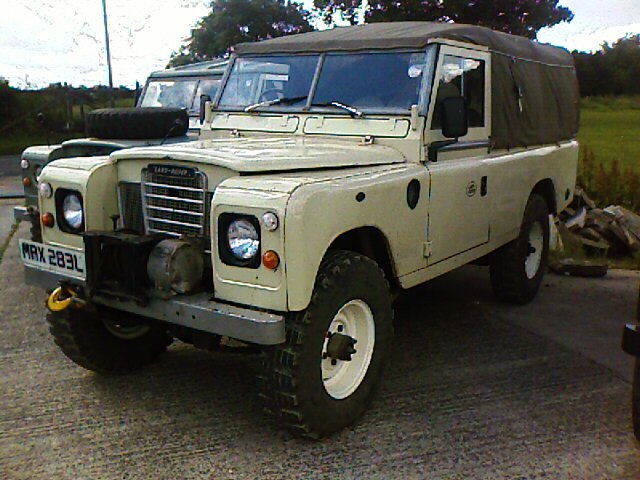
- Years
- 1968–1977
- Engine
- 2.6-litre six-cylinder petrol
- Drive
- 4x4
- Built
- 408 home-market (170 Series IIA, 238 Series III)
- Origin
- Land Rover, Solihull
Two Land Rovers carry nearly the same name, and they could hardly be more different. The One Tonne is the V8 cab-over 101. The One Ton, the subject here, is a bonneted 109 built between 1968 and 1977 in such small numbers that many enthusiasts have never seen one: 408 home-market vehicles across two Series.
Why it existed
By the late 1960s the standard 109-inch chassis was being stretched to its limit. Specialist bodywork, fire-tender conversions and heavy trades all wanted more payload than the long-wheelbase Land Rover could legally or sensibly carry, and the four-cylinder engine was marginal once a heavy body went on. Rover’s answer was an uprated 109 rather than a new model, unveiled at the Commercial Motor Show at Earls Court in September 1968, with production getting properly under way in April 1969.
Engineering character
The One Ton is best understood as a parts-bin masterstroke, borrowing its heaviest components from the Series IIB Forward Control. The 2.6-litre six-cylinder petrol engine provided the power, the gearbox and transfer box came with the IIB’s ratios, and ENV heavy-duty axles were fitted front and rear. The chassis was reinforced, with extended spring hangers and drop-shackle suspension, and the vehicle rode on 900x16 tyres on 6.5-inch deep-dish steel rims, later with a 7.50x16 option.
The tall tyres dragged at the steering, so Rover fitted a lower-geared steering box, twin steering relays and a hydraulic damper on the drag link. A narrow 11-gallon fuel tank sat at the rear, shaped to leave room for power take-off installations. None of this was glamorous. All of it was aimed at one job: carrying a genuine ton, off road, without breaking.
| Item | Specification |
|---|---|
| Engine | 2.6-litre six-cylinder inline petrol |
| Transmission | Gearbox and transfer box ratios shared with the Series IIB FC |
| Axles | ENV front and rear; Salisbury rear from late Series IIA, Salisbury front on Series III from late 1973 |
| Wheels and tyres | 900x16 on 6.5 in deep-dish rims (7.50x16 optional later) |
| Home-market production | 170 Series IIA (to September 1971); 238 Series III |
Production and use
When the range moved to Series III specification in September 1971, 170 Series IIA One Tons had been built for the home market. The Series III version added the new dashboard, grille and all-synchromesh gearbox and accounted for a further 238 home-market vehicles, with smaller numbers exported to Kenya, Tanzania, Nigeria and destinations in Europe. Axle specification drifted across the run: late IIA vehicles took a Salisbury rear axle, Series III models followed suit, and Salisbury fronts appeared from late 1973.
Fire brigades were steady customers, since the One Ton chassis suited pump bodies and crew cabs that overwhelmed a standard 109. Utility companies and showmen took others. It was never a volume product and was never meant to be; it existed so that Land Rover could say yes to the heaviest jobs.
Survivors
With 408 home-market vehicles built over nine years, the One Ton is among the rarest production Land Rovers of the leaf-sprung era, and unrecorded exports only add uncertainty at the margins. A dedicated owners’ registry now documents known chassis, and identification matters: the six-cylinder engine, ENV axles and deep-dish rims are the tell-tales that separate a real One Ton from an ordinary 109 wearing its badges. Confusion with the 101 One Tonne persists, and probably always will.